

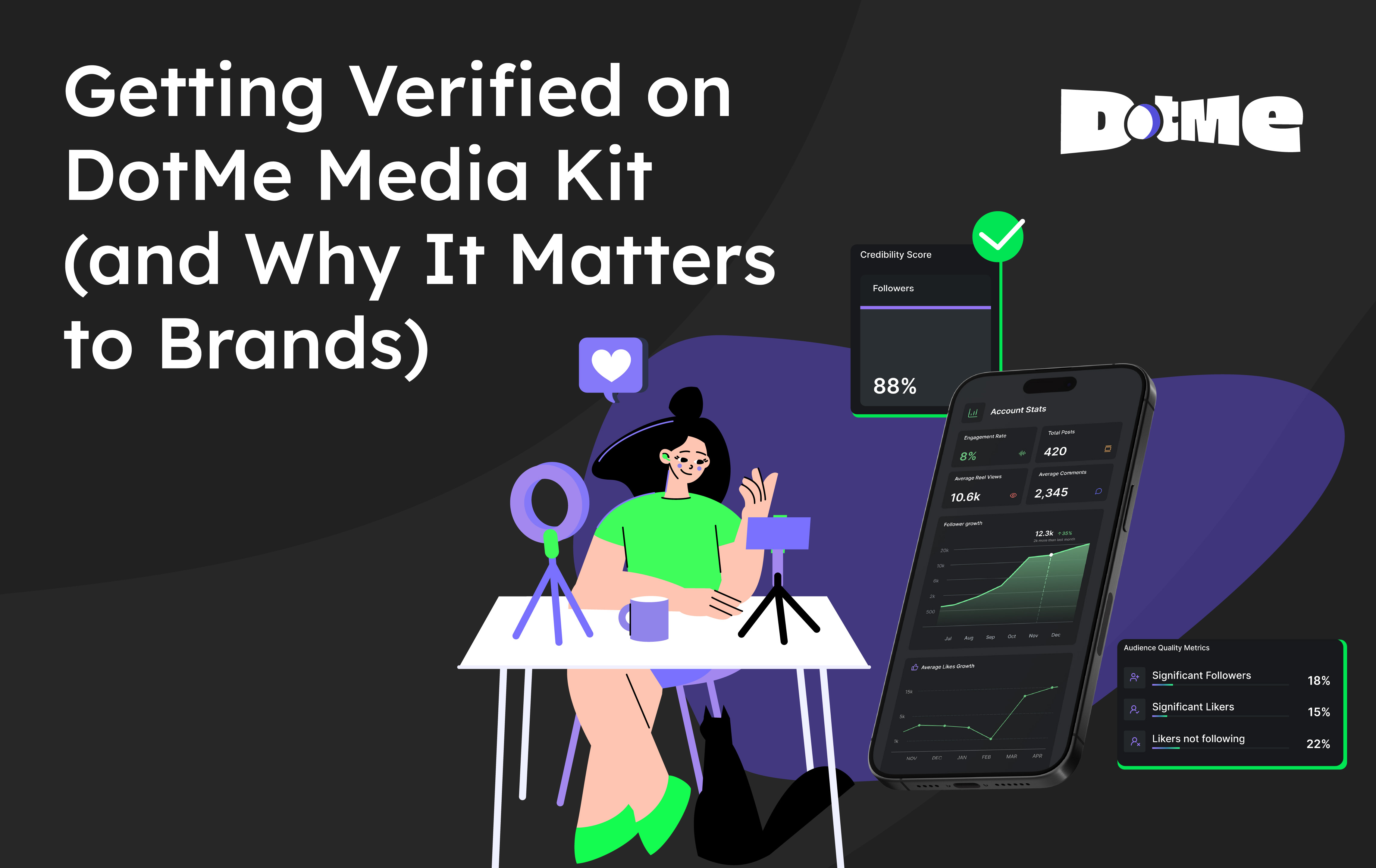
Picture a brand manager at 6pm on a Thursday, twelve tabs open, coffee long gone cold. Somewhere in that pile is your media kit. The follower count looks healthy, the engagement rate looks promising, and the whole thing is a PDF you last updated in June, held together by three cropped screenshots of Instagram Insights.
Here is the uncomfortable part. That manager has no way of knowing whether any of those numbers are still true, or whether they were ever true. And when a decision comes down to two creators with similar audiences, the one whose numbers feel trustworthy wins, almost every time.
That moment of doubt quietly costs creators deals every single week. A verified media kit removes it. This guide covers what a media kit for influencers should actually do in 2026, why verification has become the deciding factor for so many brands, and how getting verified on DotMe Media Kit puts your real numbers in front of the people who pay for them.
Key Takeaways
- A media kit is only as persuasive as the trust behind its numbers: Brands increasingly discount figures they cannot verify, however impressive they look.
- Static PDFs and screenshots have a shelf life: They go out of date the day they are exported, and brands know it.
- Influencer fraud has made brands cautious: One large 2026 study found signals of fake followers or engagement on a substantial share of Instagram accounts, and every marketer has heard a horror story.
- A verified influencer media kit answers the authenticity question before it is asked: Data pulled directly from connected platforms leaves very little room for doubt.
- Verification unlocks access: On DotMe, getting verified opens the door to DotMe Deals, where brands aligned with your audience can approach you directly.
- Brands need media kits too: A clear brand media kit makes partnership invitations far more convincing to the creators you want to work with.
What Is a Media Kit, Really?
A media kit is a creator's professional introduction to brands. It tells a potential partner who you are, what you make, who watches it and how those people respond, so a brand can decide quickly whether a partnership makes sense. Think of it as the trailer for your creator business. Nobody reads the full script before deciding whether they want to see the film.
A strong influencer media kit covers a short bio and your niche, the platforms you create on with follower counts for each, your engagement rate and average reach, audience demographics such as location, age and gender, a handful of past brand collaborations with results, the services you offer and a clear way to get in touch.
For years, creators built these as PDFs or design files. Some of them were genuinely beautiful. They also shared three stubborn weaknesses. They went stale the moment they were exported. The numbers inside them came from screenshots anyone with ten minutes and a photo editor could change. And brands had to take every single figure on trust, which is a lot to ask of someone about to spend real money.
Why Brands Have Stopped Taking Numbers on Trust
Influencer fraud has made brands wary, and with good reason. A March 2026 study by SociaVault Labs, covering 100,000 Instagram and TikTok accounts, put Instagram's combined fake follower and fake engagement rate at 41.8%. It is one vendor's sample rather than an industry census, but marketers do not need a precise figure to feel the risk. One campaign wasted on a bot-heavy audience is enough to make a brand sceptical of every unverified screenshot that lands in its inbox afterwards.
The result is a longer, slower vetting process. Brands ask for fresh screenshots, run third-party audits, schedule extra calls and loop in more approvers. Each of those steps adds days, and every extra day gives a deal another chance to quietly fizzle out. The frustrating part for honest creators is that their genuinely strong numbers get caught in the same net as everyone else's inflated ones.
Verification cuts through all of that. When the data comes straight from the platform and stays current on its own, a brand can make a confident decision in minutes rather than weeks.
What Verification Means on DotMe Media Kit
A DotMe Media Kit is built on live data. Instead of uploading screenshots, you connect your accounts and DotMe pulls your analytics directly, bringing together insights from Instagram, YouTube, LinkedIn, X and TikTok in one shareable link. Because the kit refreshes automatically, the brand looking at it on a Thursday evening sees your reach and engagement as they stand that day, rather than a snapshot from whenever you last remembered to update a file.
Verification adds a layer of trust on top of that live data. It tells brands your media kit is a reliable source they can use when evaluating a partnership, and it separates creators with authentic, platform-sourced numbers from profiles that cannot back up their claims.
Verified Influencer Versus Blue Tick
It is worth separating this from the blue tick most people picture when they hear the word verified. Platform verification on Instagram or X confirms that an account belongs to the person it claims to be. A verified influencer media kit confirms something brands care about even more when money is on the table, which is that the performance numbers in front of them are real and current. One protects your identity. The other protects your rate card.
Why Verification Matters So Much to Brands
Spend a week inside a brand's influencer team and you notice something. Very few deals die because a creator was the wrong fit. Far more of them stall in the gap between "this creator looks great" and "we are confident enough to sign". That gap is filled with questions, follow-up emails and approvals from people who have never seen the creator's content. Behind almost every delay sit the same four questions, and a verified media kit answers each of them before anyone has to ask.
Are These Numbers Real?
This is the question every brand asks first, even when it never says it out loud. A self-reported engagement rate of 6% could mean an unusually loyal community, or it could mean engagement pods, purchased likes or a single viral post doing a lot of heavy lifting. A screenshot cannot tell the difference, and a carefully cropped one can hide quite a lot.
When your DotMe Media Kit pulls data directly from your connected platforms, the figures arrive from the source rather than through you. There is nothing to edit and nothing to second-guess. For a brand, that removes the most uncomfortable part of the evaluation, which is quietly wondering whether it is being misled. For you, it means your genuinely strong numbers finally get the credit they deserve, instead of being discounted alongside everyone else's.
Are They Current?
Creator numbers move fast. A good month can add thousands of followers, a platform algorithm change can shift reach overnight, and a creator who was a perfect fit in March may have pivoted their content by July. Brands know this, which is why a media kit dated three months ago often triggers a request for fresh stats before anything else can happen.
That single request costs more than it seems. It adds a round of email, a wait for a reply and a fresh set of screenshots that then need checking all over again. A live media kit removes the step entirely. Whether a brand opens your link on the day you share it or six weeks later during planning for next quarter, it sees your numbers as they are that day. Your media kit stops ageing the moment you stop editing it.
Is This the Right Audience?
Follower count tells a brand how many people are watching. It says nothing about who those people are. A skincare brand targeting women aged 25 to 34 in Mumbai and Bengaluru needs to know whether your audience actually looks like that, and a creator with 30,000 perfectly matched followers is often worth far more to them than one with 300,000 scattered across the globe.
A DotMe Media Kit places audience demographics and engagement side by side in one clear view, so a brand can judge fit in a single glance instead of piecing it together from separate screenshots and spreadsheets. When fit is obvious, the conversation moves forward. When fit is hard to see, brands tend to play it safe and pick someone whose audience they can understand more easily.
How Do We Reach Them?
It sounds like the easiest question of the four, yet it quietly ends a surprising number of partnerships. Contact details buried at the bottom of a PDF, a manager who takes a week to reply or a bio link that leads nowhere useful can all turn an interested brand into a brand that has moved on to someone else.
Because your DotMe Media Kit sits right inside your link in bio, brands and agencies can view it and get in touch with you directly, with no middlemen and no waiting for someone to forward an attachment. The path from "this creator looks interesting" to "let's talk" becomes a single tap, which is exactly how short it should be.
When all four questions are answered before anyone picks up the phone, the first conversation can skip the interrogation and go straight to the interesting part: creative ideas, deliverables and commercial terms. That is a much better conversation to be having, for you and for the brand.
What Verification Unlocks for Creators
For creators, verification turns credibility into access. Brands spend less time vetting you and more time briefing you, which means faster decisions and fewer deals lost to silence. Your negotiating position gets stronger too, because verified engagement data supports your rates far more convincingly than a screenshot ever could. One live link also makes a sharper first impression than a folder of attachments.
Then there are DotMe Deals. Getting verified unlocks access to Deals, where brands whose audiences align with yours can approach you directly, and you stay in control of which conversations you take forward. In other words, your media kit stops waiting to be sent and starts being found.
How to Get Verified on DotMe Media Kit
The process is designed to be simple, and most of it is work you would want to do anyway. Start by creating your DotMe profile in the app and claiming your dotme.bio link. Build out your media kit with a sharp bio, your niche, your services and a few past collaborations. Connect the platforms you create on so DotMe can pull your analytics directly. Check your eligibility for verification in the app and fill in anything that is missing. Then share your verified kit everywhere that matters, from your link in bio to your email signature to every pitch you send.
Polish Your Kit Before You Apply
Verification confirms your data, but presentation still decides whether a brand keeps reading. A few small details make a noticeable difference.
Write a two-line bio that says exactly what you create and who it is for. "Lifestyle creator" tells a brand almost nothing. "Weeknight vegetarian recipes for busy professionals in Bengaluru" tells them almost everything. Connect every platform where you have an active audience, including the smaller ones, because a modest but engaged YouTube channel can be exactly what a brand is looking for. List two or three past collaborations with a result for each wherever you can. Spell out your services clearly, whether that is Reels, Stories, YouTube integrations or event appearances. And keep your contact details current, because a brand that cannot reach you will simply move on to someone it can.
Brands Need a Media Kit Too
The same principle works in the other direction. A brand media kit, sometimes called a brand press kit, gives creators, journalists and partners a clear picture of a company, covering its story, audience, visual identity and partnership history. Good creators are increasingly choosy about who they work with, and they vet brands almost as carefully as brands vet them. A clear, current media kit for brands makes an invitation to collaborate feel considered rather than random, and that alone can be the difference between a yes and a polite no.
Final Word: Let Your Numbers Speak for Themselves
A media kit has one job, which is to make it easy for the right brand to say yes. In 2026, the biggest obstacle to that yes is doubt, and a verified DotMe Media Kit lets brands see your performance for themselves, live and from the source.
Connect your platforms. Get verified. Put the link where brands will find it. And spend the time you used to waste rebuilding PDFs on making the content that grew your audience in the first place.